
Inside China’s Sick Plot to Build an Empire of ‘Organ Harvesting Centers’ in Five Years… with ‘Donors’ Already Lined Up
Experts fear it could be part of a sickening plot to use detained Uyghurs as a living organ 'donation' bank. 'DOCTORS BECAME EXECUTIONERS'

By Katie Davis
July 28, 2025
CHINA'S regime is significantly expanding its empire of organ harvesting centres in a twisted bid to make money, experts say.
A plot to build six new sites in Xinjiang Uyghur by 2030 has stoked fears of forced organ removal, given staggeringly low donation rates in the region.
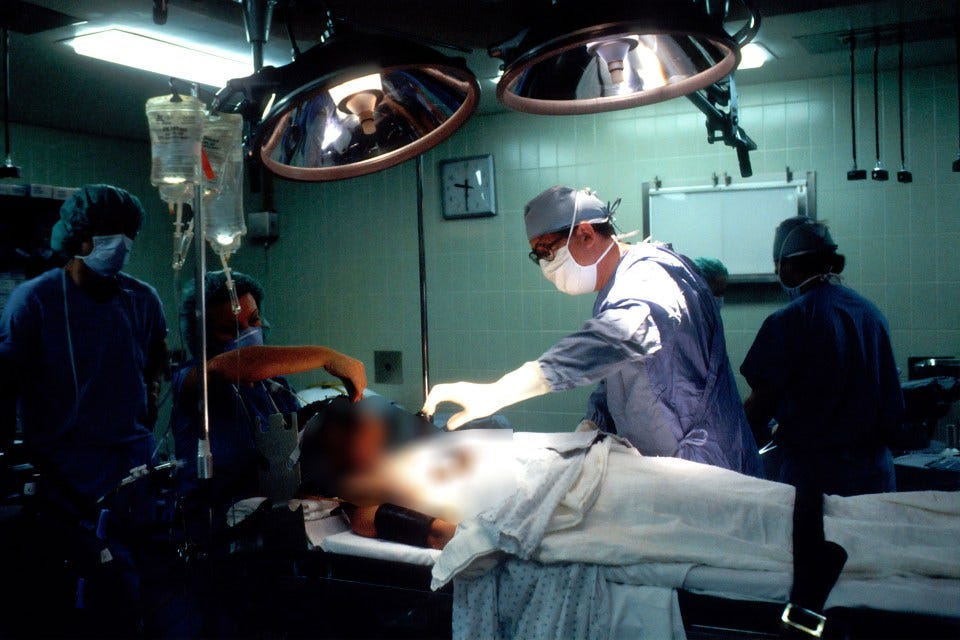
An organ removal operation takes place in China.
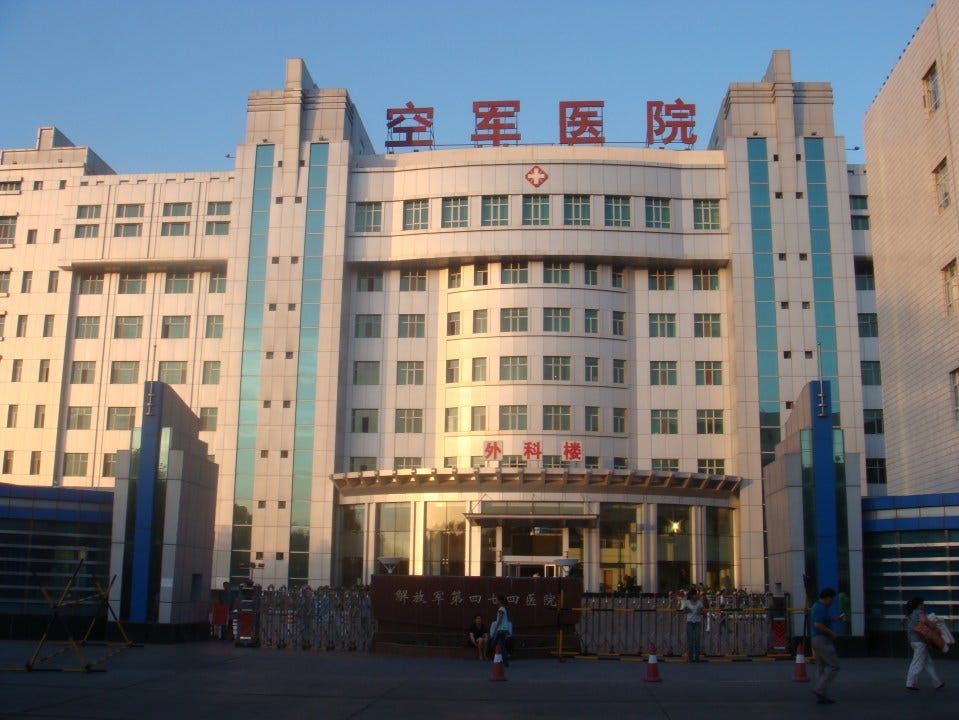
A hospital in Urumqi in Xinjiang, China
China’s organ trade is already estimated to have a market value of $1 billion per year - which the Communist government wants to swell.
A liver transplant, for example, can cost around £118,000 ($160k) in China - but with a much shorter waiting time compared to the rest of the world.
This draws in not only recipients from inside the sprawling nation, but also unsuspecting international visitors who travel there for a transplant.
China's regime has long been accused of orchestrating a non-consensual organ harvesting campaign against persecuted minorities.
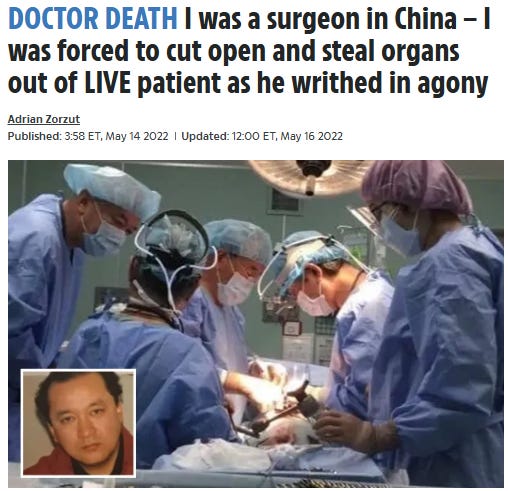
WHAT was supposed to be an innocent hospital trip for budding young surgeon Enver Tohti turned out to be a nightmare when he was forced to operate on living prisoners.
Tohti, 58, was a cancer surgeon in Xinjian region in the 1990s but was forced to flee his beloved home country after threats from Chinese communist state.
Prisoners are known to be killed specifically for the extraction of their organs.
Experts say the primary victims of forced organ harvesting are those who follow Buddhist qigong and meditation practice of Falun Gong.
They also believe that incarcerated Uyghurs fall victim - and new facilities are planned to open in their autonomous region of Xinjiang.
At least six transplant institutions are tipped to open in the next five years, which campaigners say is hugely disproportionate to Xinjiang's low organ donation rate.
Xinjiang is understood to have an organ donation rate of just 0.69 per cent per million people - significantly below the national average of 4.66 per cent.
It has raised questions among experts who fear it could be part of a sickening plot to use detained Uyghurs as a living organ "donation" bank.
Uyghur detainees have reported forced blood tests, ultrasounds and organ-focused medical scans while in custody.
Insiders say such procedures are consistent with chilling organ compatibility testing.
Wendy Rogers, Chair of the International Advisory Board of the International Coalition to End Transplant Abuse in China (ETAC), told the Sun:
"The guise is that all the organs will come from voluntary donations."
But this is implausible given the reported rate of just 0.69 donors per million people in Xinjiang.
"This massive expansion in Xinjiang - a region already under scrutiny for systematic repression - raises deeply troubling questions about where the organs will come from.
“There is simply no justification for such growth in transplant capacity given the region’s official organ donation rate, which is far below the national average.”
Up to 100,000 organ transplants are estimated to be carried out in China every year - with huge swathes harvested without consent.
New facilities - which will triple the number in the region from three to nine - will offer heart, lung, liver, kidney and pancreas/ small intestine transplants.
The Chinese government claimed back in 2015 that it had stopped using organs from executed prisoners - but no legal reforms were coupled with the announcement.
Experts say sourcing organs from prisoners was never explicitly banned either.
Rogers, who is a professor of Clinical Ethics, added: "We know that China is expanding its transplant capacity in Xinjiang, despite the relatively small population, low voluntary organ donation rates and existing capacity.
"This doesn't make sense unless the hospitals involved are confident that there will be a steady supply of organs for transplantation.
"In the absence of any other organ source, we believe that the organs will come from Uyghur and other minorities who are incarcerated in camps Xinjiang, and killed for their organs.
"Organ transplantation generates a lot of income, so the motive may be financial."
It comes after The Sun reported how China's government uses cash bribes and death threats in a warped intimidation crusade against critics.
BRUTAL CRACKDOWN
China’s Communist ‘mafia’ using bribes & death threats in twisted bid to silence organ harvesting whistleblowers in UK
Leaked documents exposed a shocking escalation of attacks on whistleblowers and victims of a forced organ harvesting campaign orchestrated by the regime.
Whistleblowers who attended a secret Chinese Communist Party (CCP) meeting have revealed information from inside Xi Jinping's government.
This and a dossier of evidence laid bare a multi-pronged scheme spearheaded by Xi to silence members of Falun Gong and other groups vocal about China's severe persecution.
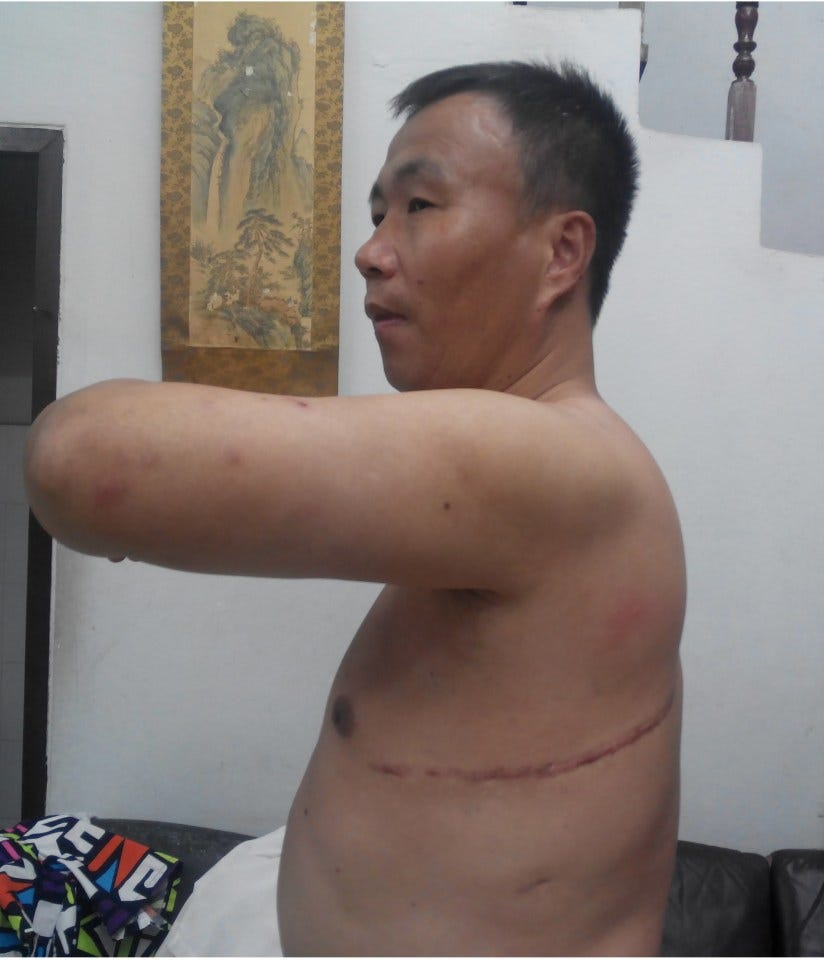
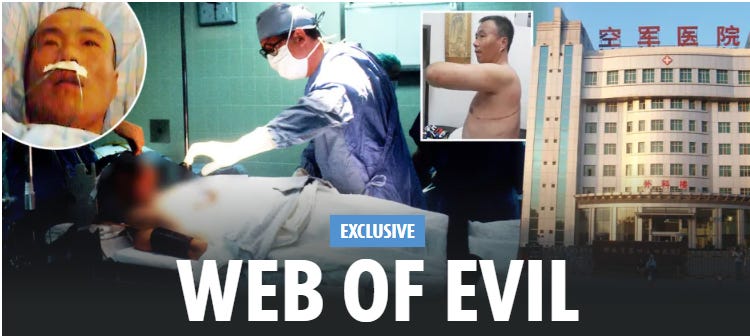
Cheng Peiming, pictured showing a huge scar from forced surgery, has been threatened. Credit: International Coalition to End Transplant Abuse in China
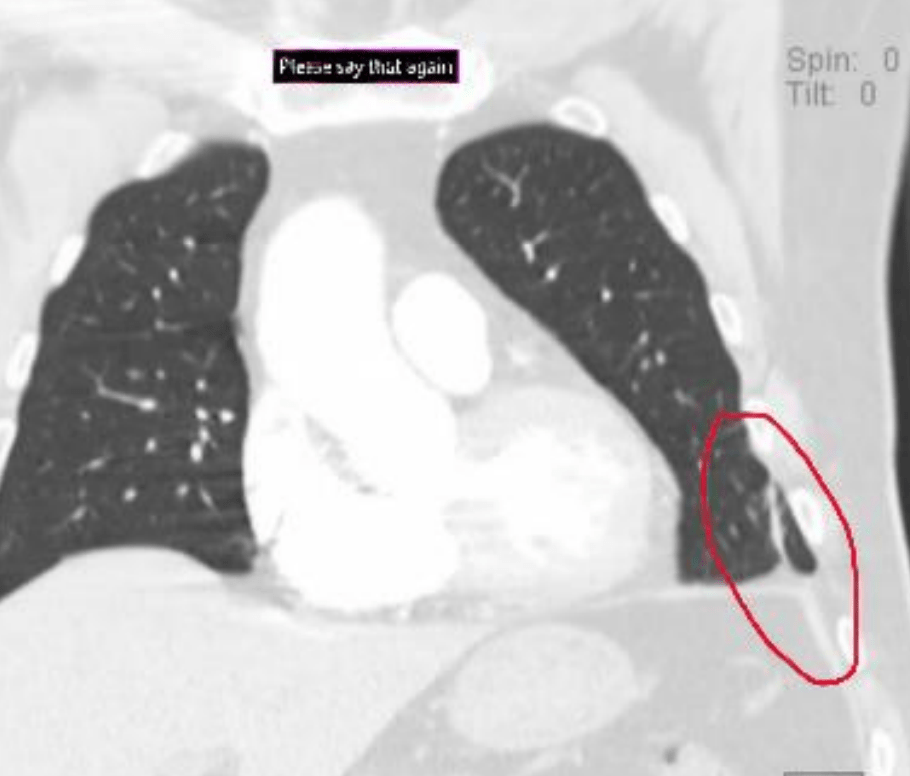
Scans show part of Cheng's lung was cut out. Credit: International Coalition to End Transplant Abuse in China
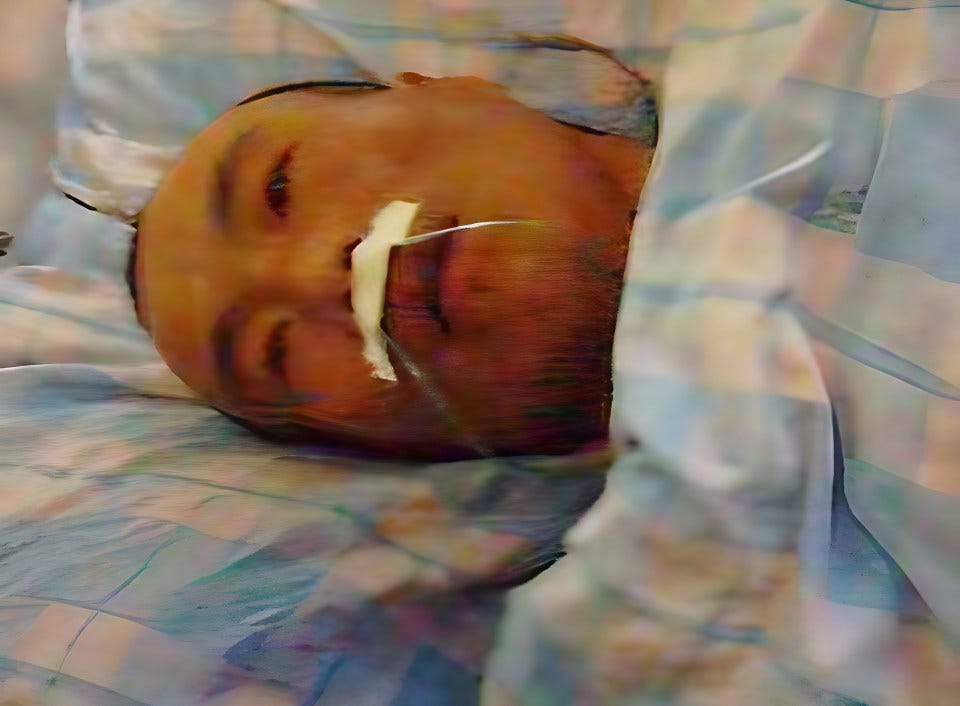
Cheng in hospital after an allegedly forced operation. Credit: International Coalition to End Transplant Abuse in China.

Campaigners have previously sought to show how Falun Gong members are treated in staged 'torture' sessions. Credit: AFP - Getty
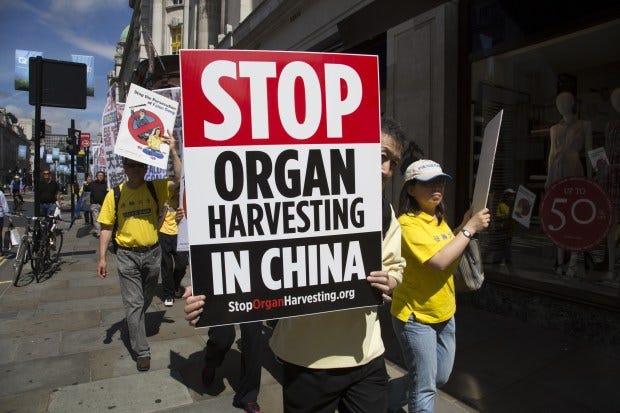
Organ harvesting in China
PRISONERS in China have been specifically killed for the extraction of their organs.
China is said to be the organ harvesting capital of the world, where some 100,000 transplants occur every year, according to medical professionals.
Transplant recipients included Chinese nationals - as well as unsuspecting international tourists who travelled there to receive an organ.
This could be at a considerable cost, with for example a liver transplant costing £125,000 - but with a greatly reduced waiting list.
Recipients are not thought to be aware that the source of their transplant had been from prisoners who organs were removed to order.
Experts say the primary victim community of forced organ harvesting are people who practice the Buddhist qigong and meditation practice of Falun Gong.
They also believe that incarcerated Uyghurs are also now victims of forced organ harvesting in China.
In 2000, coinciding with the beginning of the persecution of Falun Gong, China’s organ transplantation industry exploded in activity.
Vital organs became readily available within a matter of days, while reports of ‘emergency’ livers being sourced within 4 hours began to emerge.
State-run hospitals and hundreds of independent websites began advertising very short wait times for transplant operations involving hearts, livers, kidneys and corneas, and the mass market sale of organs.
At this time, China did not have a voluntary donation system in place and denied using death row prisoners for organs.

BOTTOMLINE
Reports have emerged alleging that China is expanding its organ transplant infrastructure, particularly in Xinjiang, with plans to establish six new transplant centers by 2030, bringing the total to nine.
These facilities are expected to perform heart, lung, liver, kidney, and pancreas transplants. Critics, including human rights experts and organizations like the International Coalition to End Transplant Abuse in China (ETAC), express alarm due to Xinjiang’s low voluntary organ donation rate of 0.69 donors per million people, significantly below the national average of 4.6.
This raises concerns about the potential for forced organ harvesting, particularly from persecuted groups like Uyghurs and Falun Gong practitioners.
Historical allegations, supported by investigations such as the 2019 China Tribunal, suggest China has engaged in forced organ harvesting from prisoners of conscience, including Falun Gong practitioners and, more recently, Uyghurs.
The tribunal estimated 60,000 to 100,000 transplants annually, far exceeding official figures, with evidence pointing to non-consensual organ extraction, sometimes from living individuals.
Testimonies, like that of Falun Gong practitioner Cheng Peiming, describe forced surgeries and organ removal.
Despite China’s 2015 claim to have stopped using organs from executed prisoners, experts argue no legal reforms enforce this, and short transplant wait times—often days or weeks—suggest a readily available organ supply inconsistent with voluntary donation rates.
The expansion in Xinjiang, a region under scrutiny for mass detentions and biometric data collection, fuels suspicions of an industrial-scale organ harvesting operation, potentially targeting detainees.
The $1 billion-a-year organ trade, coupled with transplant tourism, raises ethical concerns about sourcing.
International responses include U.S. legislation like the BLOCK Act to curb involvement in China’s organ market and UN calls for independent monitoring.
However, China denies these allegations, insisting donations are voluntary.
READ MORE:
Feds Reveal Dozens of Organ Donors May not have been Dead when ‘Procurement’ Processes Started!
Ukraine has become a world leader in black-market organ trafficking
Share or comment on this article.
Your support is crucial in exposing fake news and in helping us defeat mass censorship.
Horrible! Needs to be stopped.