
NUKE THREAT SURFACES: US Breaks Protocol to Reveal Location of Terrifying Submarine Brimming with NUKES as Iran Issues Uranium Threat to President Trump
By publicly confirming the location, Pentagon signaled a deliberate message to adversaries, sharpening security pressure on Iran while reaffirming support for NATO partners amid regional instability.

By Harvey Geh
May 14, 2026
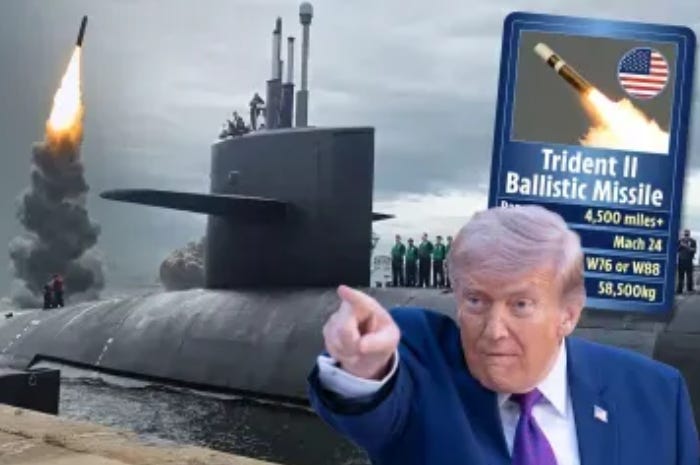
THE US has revealed the location of one of its menacing nuclear-armed submarines – as Iran issues a chilling uranium warning to President Donald Trump.
The Pentagon broke protocol by unveiling where the stealthy vessel is stationed – just one day after the US president rejected Iran‘s latest peace offer.
REVENGE BLITZ: Secret UAE strikes on Iran emerge as Tehran makes grim ‘uranium’ threat after President Trump warns ceasefire is on ‘life support’
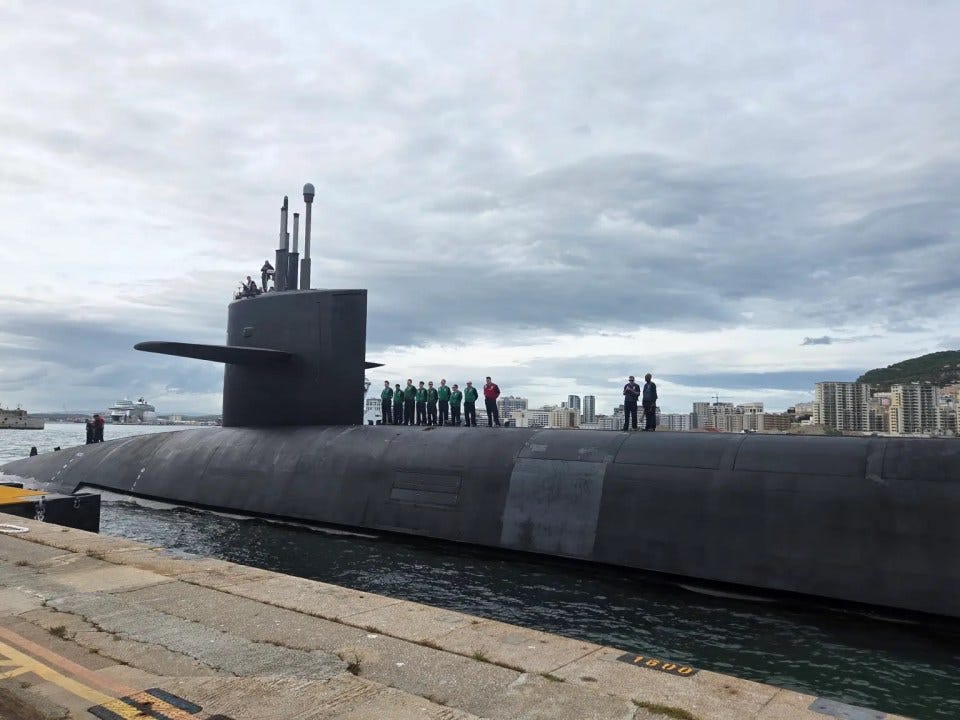
The Pentagon broke protocol by revealing the location of one of its nuclear submarines. U.S. Navy
The Navy’s Sixth Fleet posted an image of a terrifying Ohio-class submarine and its crew docked in Gibraltar on Sunday.
But Washington did not reveal the exact name of the vessel docked at the British territory, off Spain’s south coast.
The Sixth Fleet said: “The port visit demonstrates US capability, flexibility, and continuing commitment to its NATO allies.
“Ohio-class ballistic missile submarines are undetectable launch platforms for submarine-launched ballistic missiles, providing the US with its most survivable leg of the nuclear triad.”
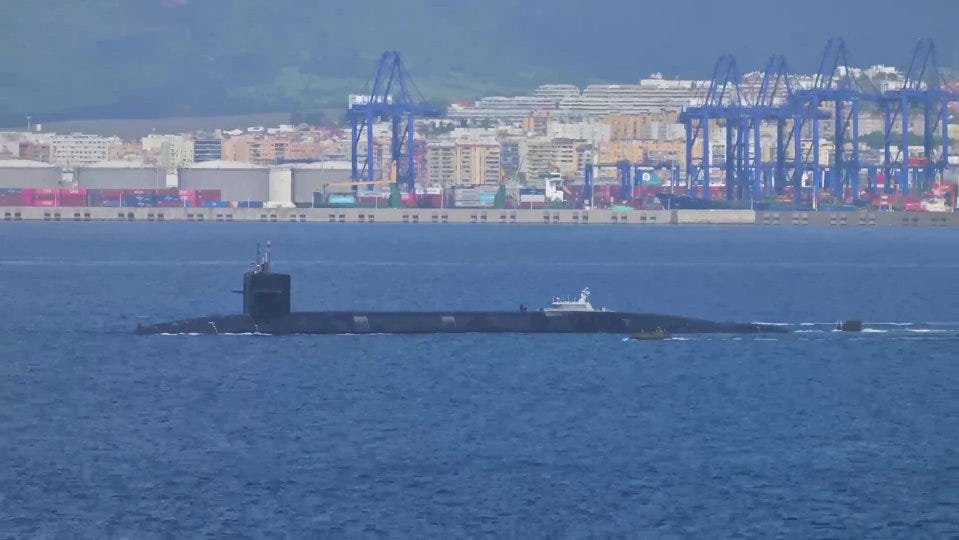
The US Navy submarine pictured departing Gibraltar following a brief stopover. SWNS
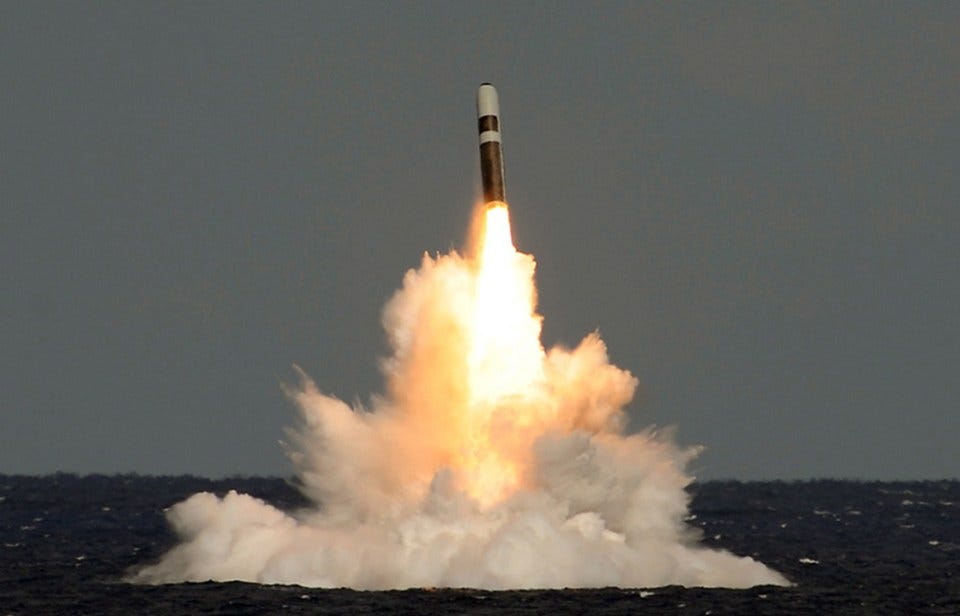
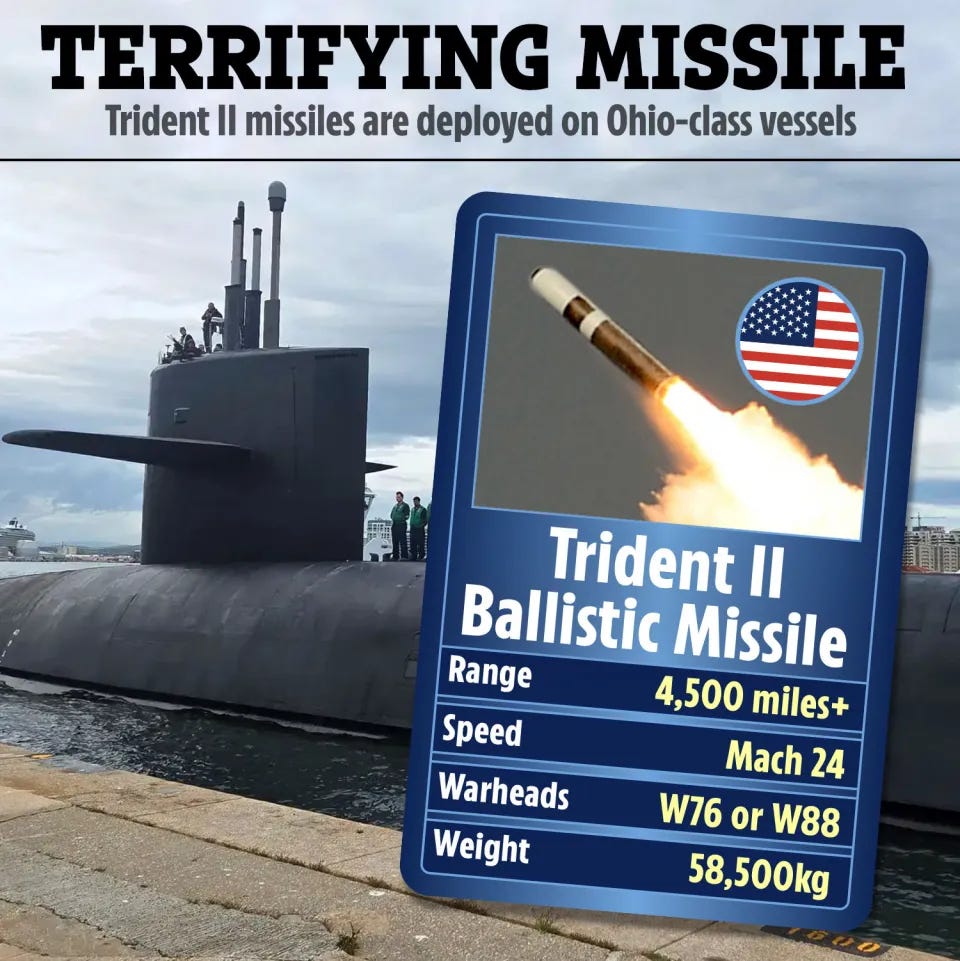
The Trident II missile can reach speeds of up to 24 times the speed of sound. PA
There are currently 14 nuclear-powered and nuclear-armed Ohio-class submarines operated by the US Navy.
The sub’s Trident II ballistic missiles have a huge range of over 4,500 miles – roughly the distance between Moscow and Washington DC.
The locations of the White House‘s nuclear subs are often shrouded in mystery and kept secret as highly classified information.
The bombshell disclosure came after Tehran issued a stark warning over its uranium enrichment.
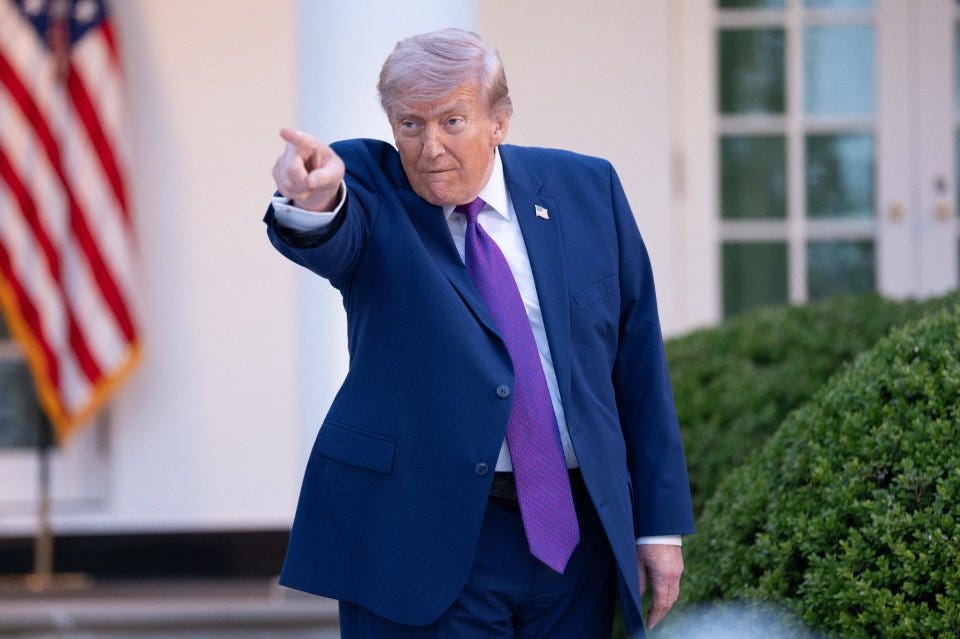
President Donald Trump was threatened with uranium enrichment. Shutterstock Editorial
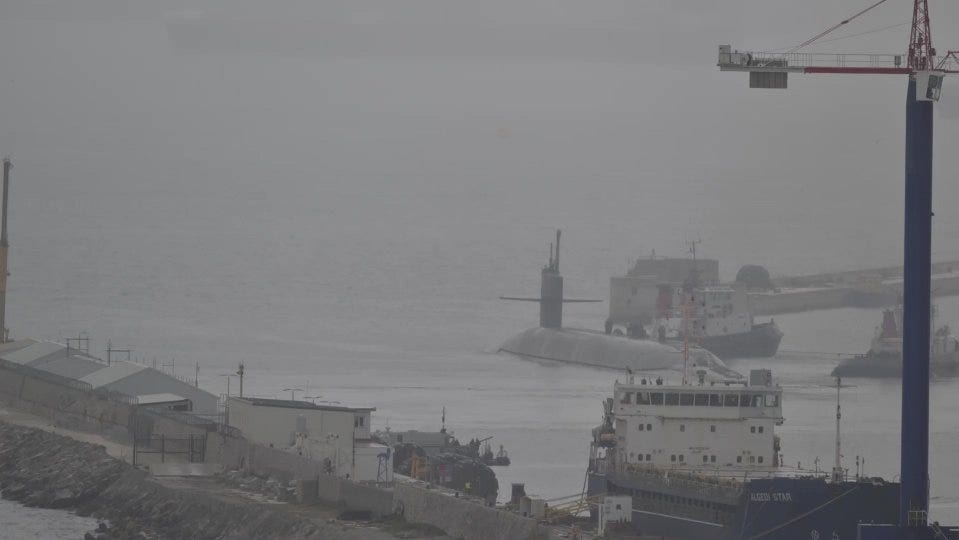
The terrifying sub pictured in Gibraltar. SWNS
The mullah regime hinted it would order uranium enrichment up to weapons-grade 90 per cent if American and Israeli forces attacked again.
The comments came in response to President Trump saying the ceasefire was “on massive life support”.
Ebrahim Rezaei, spokesperson for Iran’s National Security, said on X:
“One of Iran’s options in the event of another attack could be 90% enrichment. We will review it in the parliament.”
Meanwhile Iran’s parliamentary speaker Mohammad Bagher Ghalibaf declared Tehran’s armed forces are “prepared for all options; they will be surprised”.
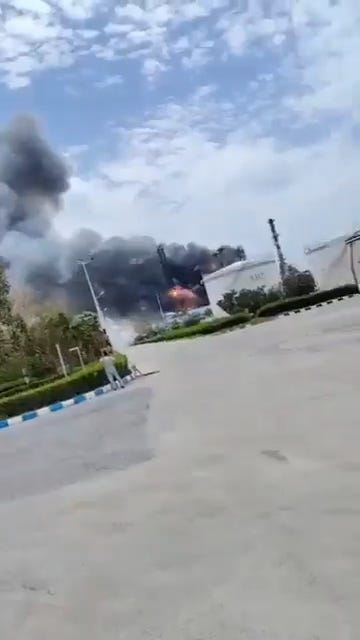
Secret UAE strikes were launched on Iran last month, reports claim. X
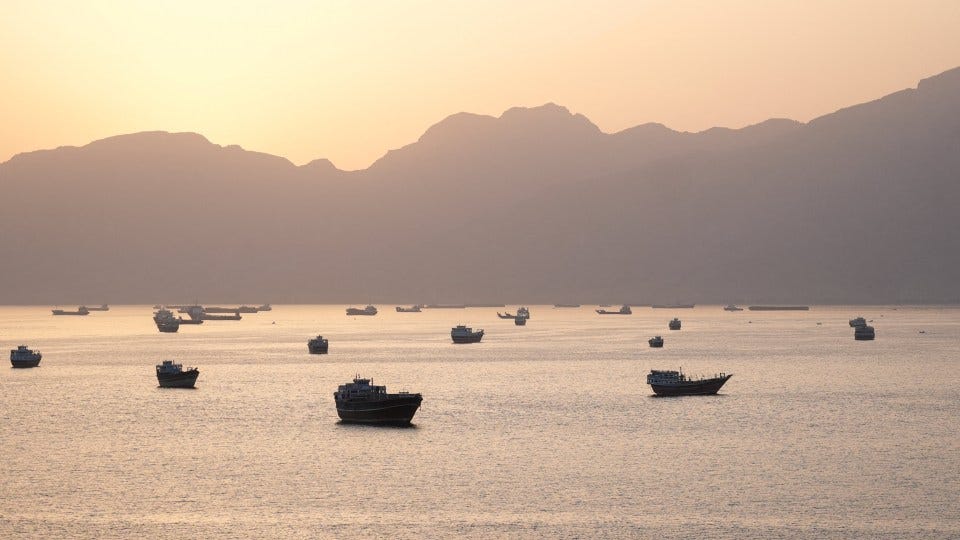
The Strait of Hormuz saga has continue to strain global oil markets. Reuters
It has also been reported that the UAE carried out secret strikes on Iran causing major damage to a key oil refinery last month.
The attacks took place in early April just as President Trump announced the ceasefire.
One of the strikes hit the Lavan Island oil refinery in the Persian Gulf, sparking a huge fire which is expected to cripple its output for months, sources told the Wall Street Journal.
The U.A.E. Has Been Secretly Carrying Out Attacks on Iran
At the time, Iran said the refinery was struck by enemy fire.
While the Islamic Republic did not name the source, it launched a counterattack against the UAE and Kuwait.
The fragile peace agreement between the US and Iran threatens to unravel following hostile comments and a short exchange of fire.
President Trump summoned his national security team at the White House on Monday to “discuss a way forward” after negotiations hit a dead end.
Tehran responded to US plans for a peace deal with a counteroffer over the weekend.
The Trump administration’s latest proposal addressed a deal to end the war, reopen the Strait of Hormuz, and roll back Iran’s nuclear programme.
But President Trump blasted Tehran’s response as “completely unacceptable” and “stupid”.
The regime’s requests include US reparations, recognition of Tehran’s sovereignty over the Strait of Hormuz, the end of American sanctions, and the release of Iranian assets, according to state media.
Tehran’s enriched uranium stockpiles have been a key sticking point in negotiations to end the war.
The mullah chiefs were reportedly willing to temporarily halt uranium enrichment for a short period, but refused to dismantle its nuclear facilities.
State TV added that Iran is looking to end the war “on all fronts” – including ending Israeli attacks on Lebanon.
President Trump has repeatedly stressed that he is locked and loaded to resume his blitz on Iran if peace talks fall through completely.
But President Trump also told reporters that a peace deal is still “very possible”.
The US President said: “Look, I’ve had a deal with them [the Iranians] four or five times.
“They change their mind. They’re very dishonourable people, the leadership.”
As negotiations stall to end the Strait of Hormuz standoff, global oil prices have skyrocketed, pushing Brent crude futures to around $104 a barrel.
If the key waterway remains closed, the world will face mass starvation, a UN task force has warned.

READ MORE:
BOTTOMLINE
The US Navy’s Sixth Fleet publicly announced that an Ohio-class ballistic missile submarine (nuclear-powered and nuclear-armed with Trident II missiles) docked in Gibraltar (a British territory) on Sunday, May 10/11. They even posted a photo of the sub and crew.
This is unusual/rare because the exact locations of America’s nuclear-armed subs (the most survivable part of the nuclear triad) are normally kept highly classified for deterrence reasons. The Pentagon doesn’t routinely broadcast them.
It came one day after President Trump rejected Iran’s latest counterproposal in ongoing ceasefire/peace talks and called the truce “on life support” (or “massive life support”).
President Trump described Iran’s demands—reparations, US sanctions relief, recognition of Iranian sovereignty over the Strait of Hormuz, etc.—as “completely unacceptable.”
This is real strategic messaging amid stalled diplomacy—a visible flex in a dangerous standoff.
Share or comment on this article.
Your support is crucial in exposing fake news and in helping us defeat mass censorship.